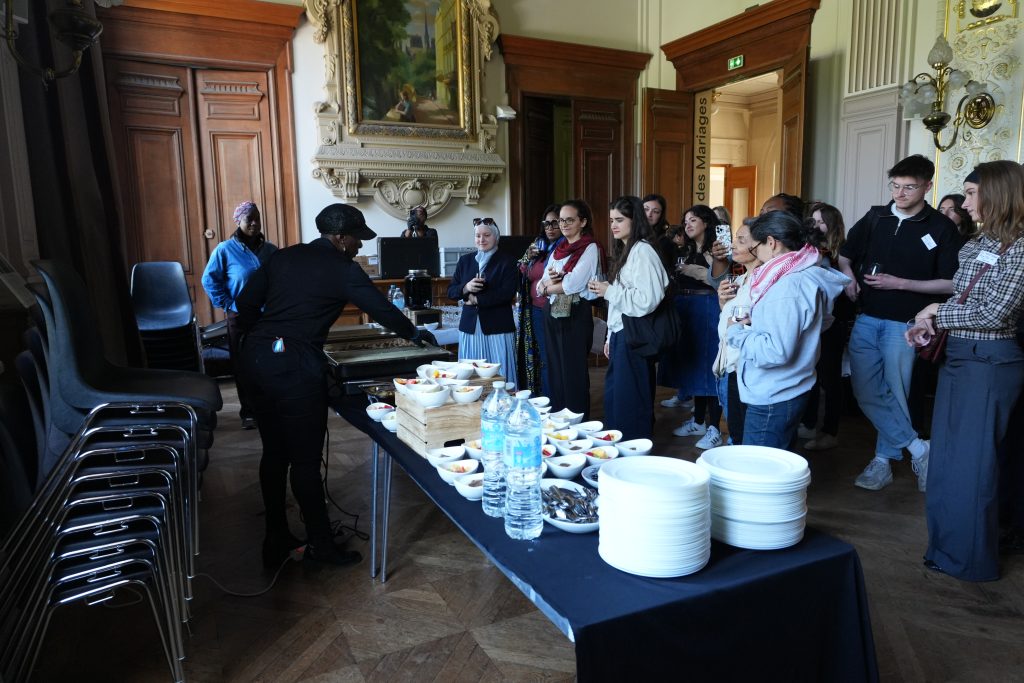
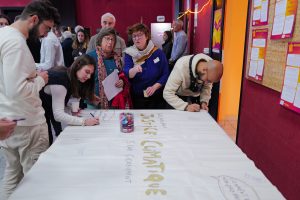
On 22 and 23 April 2026, the Académie du Climat in Paris hosted the National Meeting of Participants in the Festival of Solidarity. These two days were filled with discussions, workshops and campaigns, and today we bring you a photo round-up of the event.
[VIDEO]
Two days to network
Co-organised by CRID and La Case, this National Meeting brought together local and national stakeholders involved in Festisol, all united by a common goal: to share experiences, exchange ideas on best practice and work together to prepare for the next edition of the festival. Beyond the network itself, these two days also provided an opportunity to introduce Festisol and its key issues to the wider public, through an open programme designed in collaboration with local stakeholders.
Wednesday 22 April: workshops, community fair and plenary session
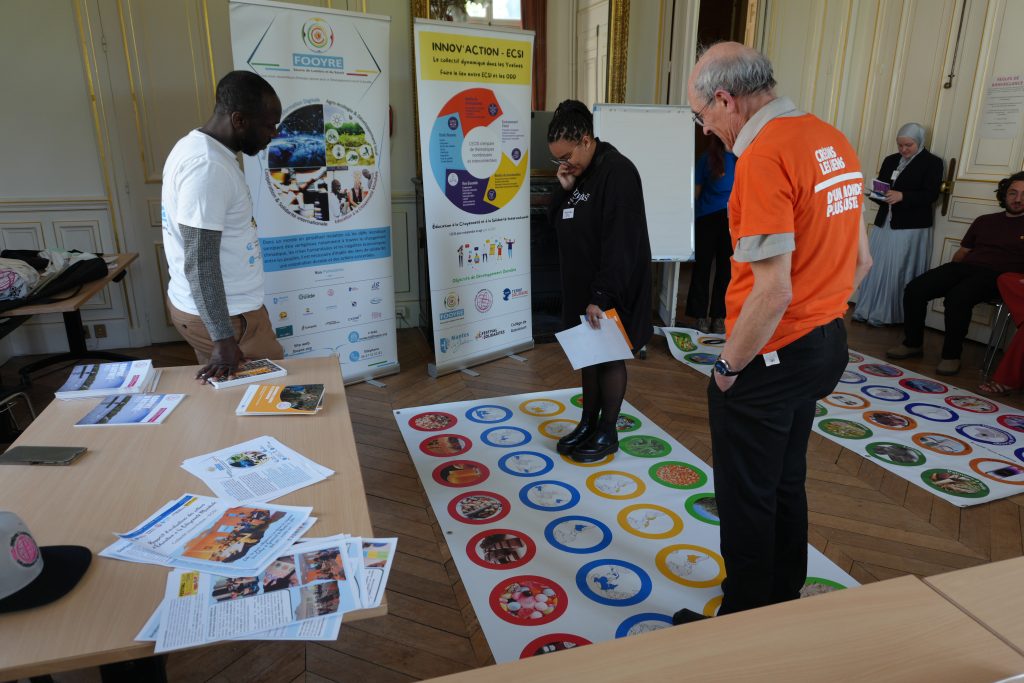
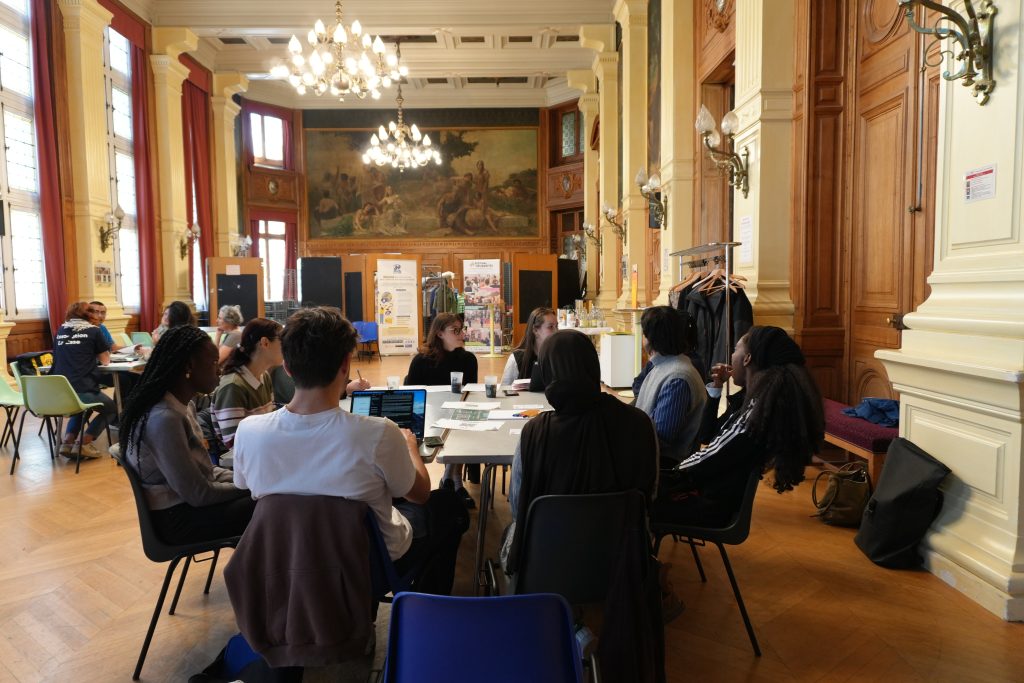
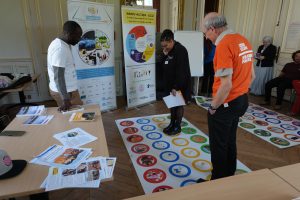
The first day featured workshops run by La Case, Horizons Solidaires, Max Havelaar, RADSI-NA and CAS 17, designed to equip local groups to organise their own Festisol events.
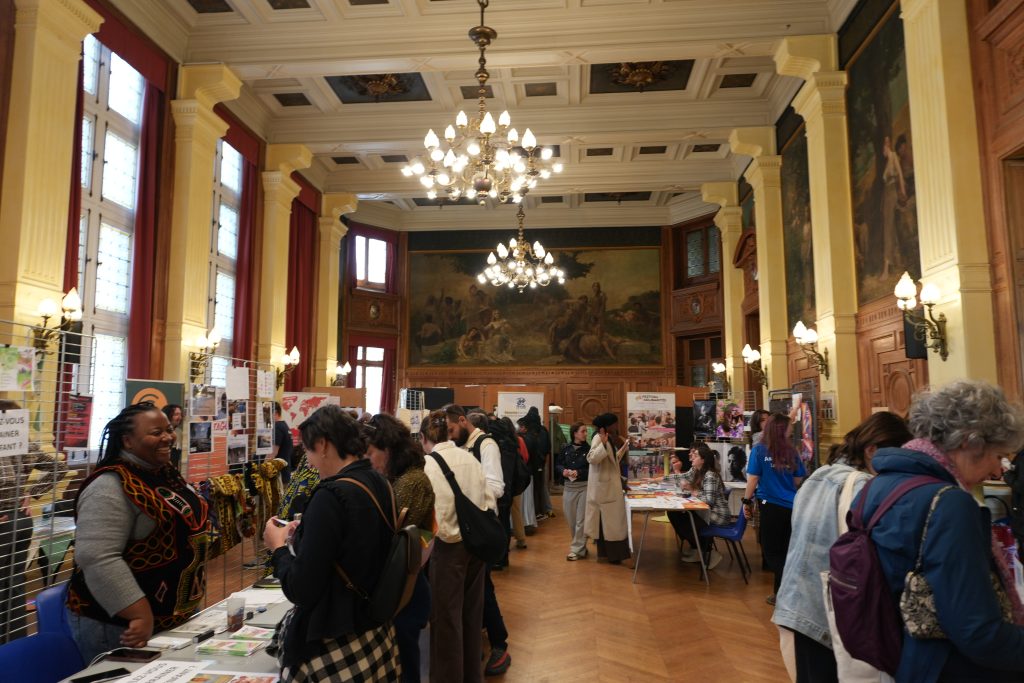
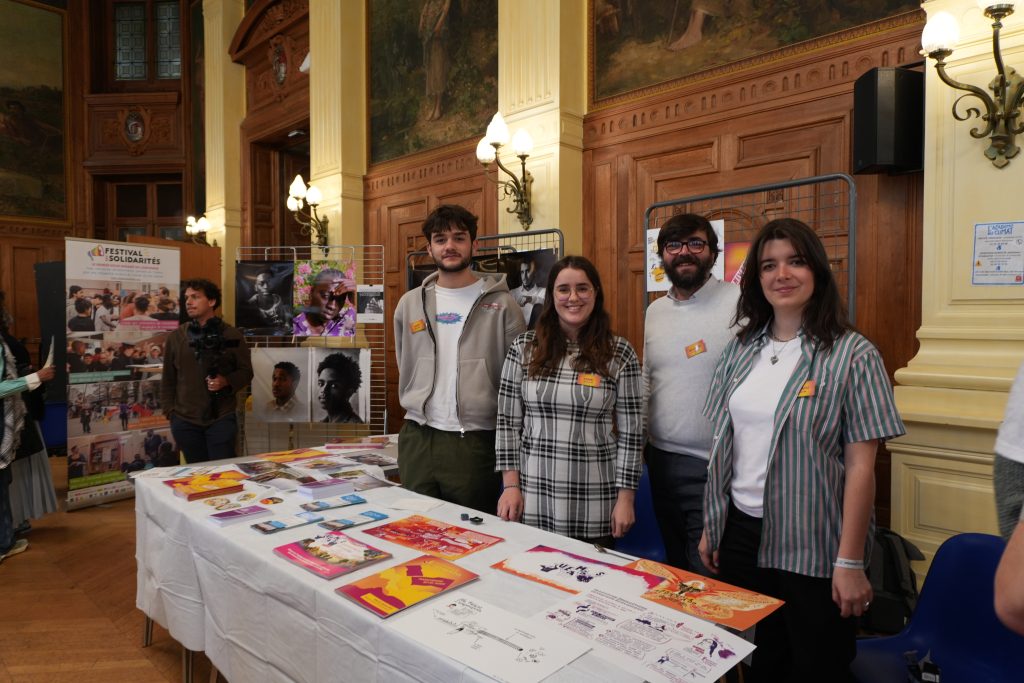
The community village brought together around twenty organisations to present their work: CRID, La Case, RRMA, Secours Catholique-Caritas France, Yanapanaku, Ensemble Contre la Peine de Mort, the Catholic Delegation for Cooperation (DCC), Partage avec les enfants du monde, KuriOz, FOOYRÉ, CCFD-Terre Solidaire, Engagé.es & Déterminé.es (E&D;), Ciudadanias por la paz de Colombia-Francia, InTerre-Accion, the French Committee for International Solidarity (CFSI), Graine Île-de-France, Coexister France, the CSIA/CICP, CULTUDE and Ladies Care.
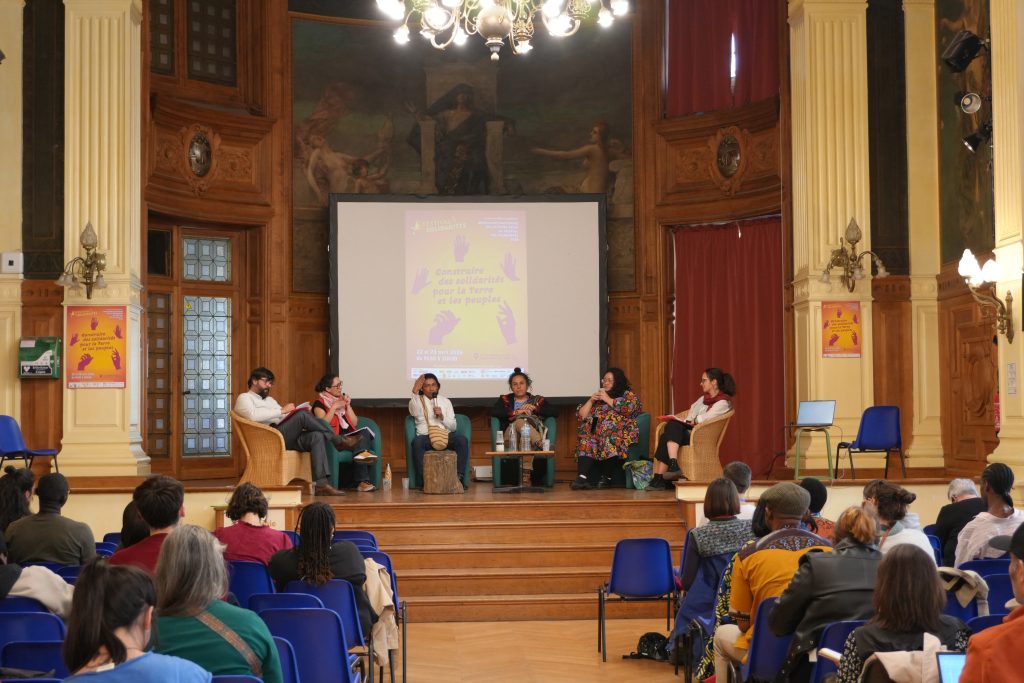
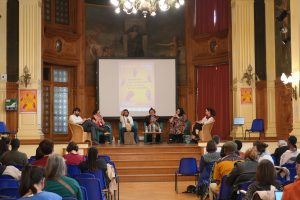
The day continued with a plenary session organised by CRID and CFSI on the theme ‘Environment and Peoples’ Rights’, featuring Juan Pablo Gutierrez of the Yukpa people of Colombia, Eliecer Arias, a leader of the Kankuamo people of Colombia, accompanied by Paula Martinez Takegami, President of the Colombia-France Citizens for Peace Association (Ciudadanías por la Paz de Colombia), Yuwey Henri from the Kalin’a Tilewuyu Nation, one of the indigenous peoples of “French Guiana”, and a remote presentation by Sarah Vanuxem, a lecturer and researcher in law.
The first day drew to a close with the show *Hercule et les Missives* by Saturnin Barré, performed by La Tribu d’Essence.
Thursday 23 April: off-site event, film screening and gestural talk
On the second day, participants were invited to step outside the walls of the Académie du Climat to explore the places that bring international solidarity to life in Paris: the premises of La Case and the CICP, as well as a decolonial walk through the streets of the capital with the Mémoires et Partages Ile-de-France collective. A tour of the Climate Academy itself gave us the chance to explore this iconic venue that was hosting us.
The highlight of the day was the screening and discussion of ‘Pilleurs de Terre’ took place in the presence of the director, Fanny Paloma, sparking a discussion on land grabbing and resistance to it with Jeanny Fongang from Ladies Care, a member of Festisol Cameroon, and Mehdi Achour, director of Action Aid.
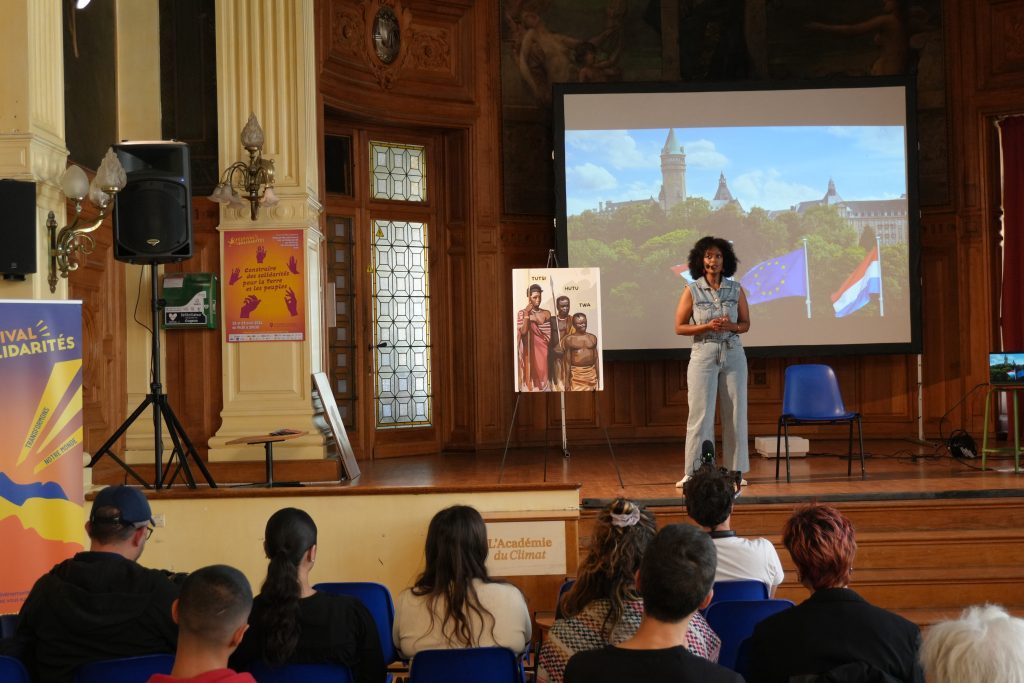
A series of new workshops brought together the CRID, La Case, the DCC, Yanapanaku, E&D; and Ciudadanias por la paz, Secours Catholique Caritas France and Diasporas Solidaires Avec les Victimes de l’Empoisonnement Colonial, followed by Sandrine Gashonga’s gestural lecture ‘Folie Décoloniale’.
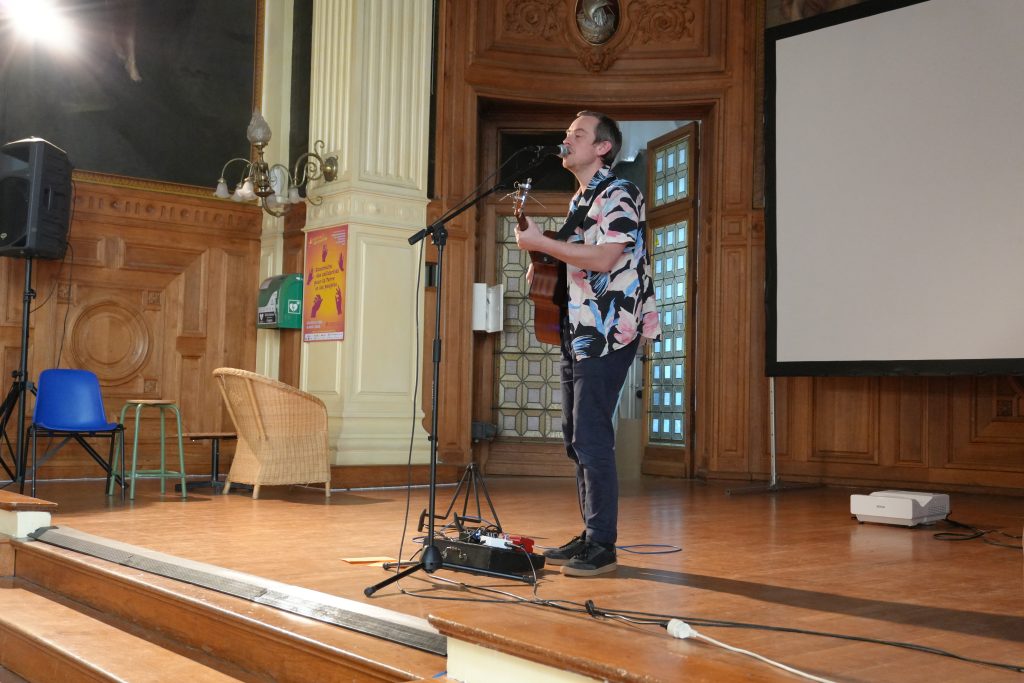
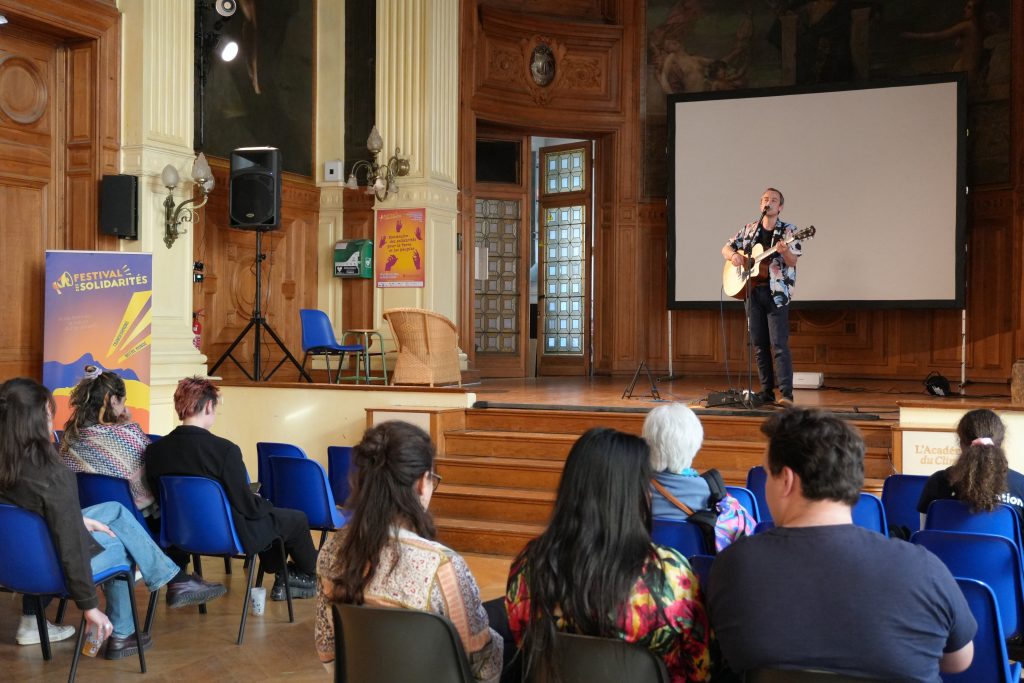
The event drew to a close with a musical performance by Toma and his show ‘Frozen Desert: A Canadian Story’, followed by a set from MLS, a socially conscious rapper.
Partners and supporters
A big thank you to Chap Chap Food for the meal we shared on the first day, as well as to all the volunteers, speakers and organisations that helped make these two days a particularly rewarding networking experience.
The Festival of Solidarity is supported at regional level by the DRIEAT (Regional and Interdepartmental Directorate for the Environment, Planning and Transport), the AFD (French Development Agency), the Department of Seine-Saint-Denis and the CRID.
See you in November 2026 for the next edition of the Festival of Solidarity.